
Hinsdale County Criminal Docket Searches
For an upcoming hearing, the Colorado Judicial Branch Docket Search is the place to begin. Pick the Seventh Judicial District, then Hinsdale County. Add the Hinsdale courthouse, and the court type you need. A date alone will not work. You must add at least one more filter, and a full case number is the strongest choice. Searching by party or attorney also narrows things down. Felonies generally sit in District Court, while County Court handles misdemeanors and state traffic cases.
Remember that the free result is only a schedule. It is not the complete Register of Actions, or ROA. For a full chronological history, go through a Judicial Branch-approved vendor. You can also ask the Hinsdale Combined Court clerk for the ROA. Charging papers, minute orders, and sentence orders must be requested from the court itself. The clerk takes requests online, by email, phone, mail, fax, or at the counter.
- Select Hinsdale and a date in the state docket tool.
- Choose District or County Court when known.
- Add the case year and sequence, party, or attorney.
- Read the newest setting and confirm the court level.
- Request the ROA or named document from the clerk when needed.
Hinsdale Criminal Docket E-Filing
Colorado Courts E-Filing is called CCE. It is a workspace for filing, not a public criminal docket anyone can browse. Its materials list criminal coverage. They also list search fields for court location, case class, case type, person, attorney, judicial officer, and open or closed status. A result may carry a linked case number, caption, type, and status. Attorneys and other authorized users can open case history or file into an existing matter.
The Judicial Branch CCE coverage page documents that criminal e-filing is part of the system. Do not confuse it with the free public schedule. A member of the public who needs an official Hinsdale County criminal ROA still has options. They go through the Combined Court clerk or an approved vendor channel.
The official CCE page shows this authorized-user layer.
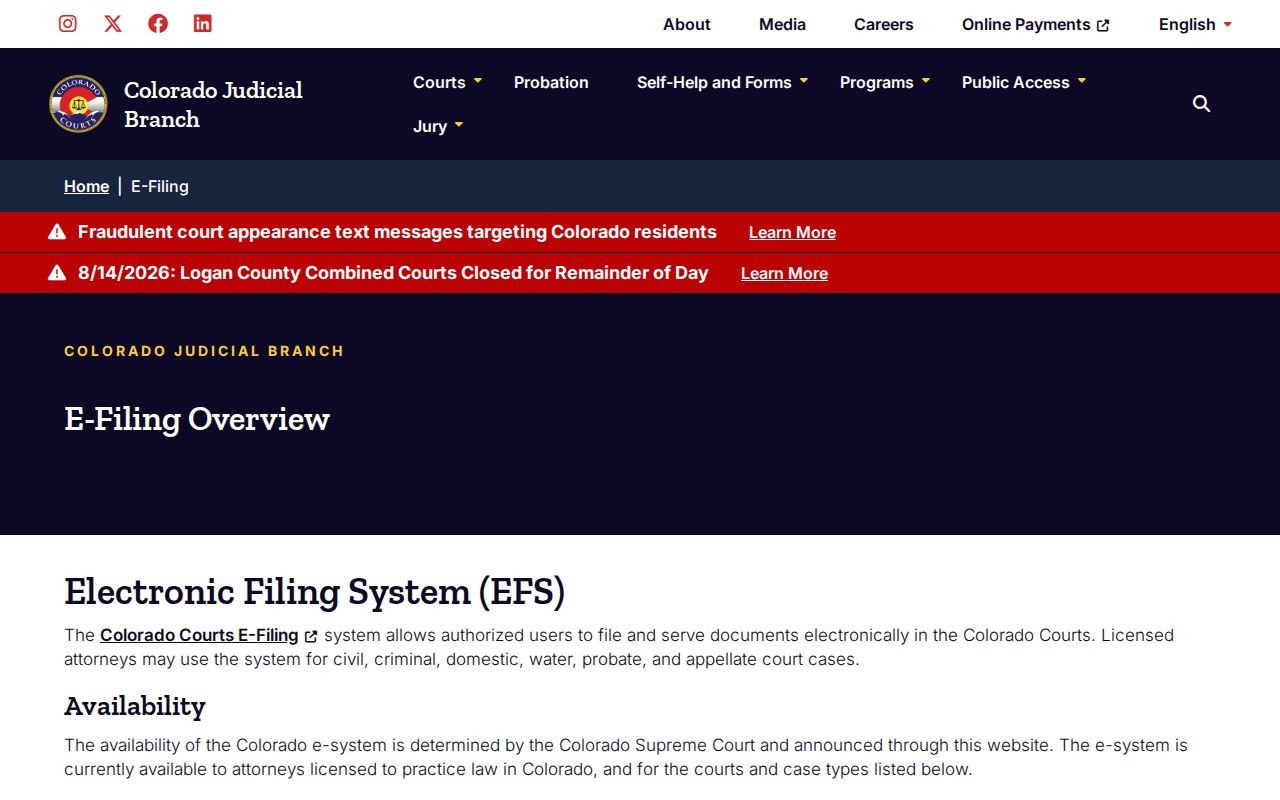
Knowing the difference helps. Filing access is not the same as public docket access, and telling them apart early keeps you from paying for or requesting the wrong product.
Criminal Dockets: What They Show
A criminal ROA opens with identity fields, then walks through events in time order. The header usually shows the case number, court, caption, class or type. It also shows open or closed status. History entries may include a complaint or information, advisement, and bond activity. Counsel appearance, motions, minute orders, plea, trial, disposition, sentence, and later collection activity can appear too. Not every case has every event.
Colorado case numbers mix a year, class letters, and a sequence. Keep each letter and any leading zero. A number like 2026CR0012 points to a District Court criminal class. An M class points to a County Court misdemeanor. When the class is unclear, the clerk can confirm it.
| Case number | Year, case-class letters, and sequence identifying the file. |
|---|---|
| Caption and status | Case title plus open, closed, reopened, or other current status. |
| Charges | Counts filed and later amended or dismissed entries. |
| Settings | Advisement, arraignment, pretrial, motion, trial, or sentencing dates. |
| Outcome | Disposition and sentence entries, which must be read separately. |
Note: An open status means the file is still active. It does not establish guilt or predict how any charge will end.
Read Hinsdale Criminal Docket Outcomes
Charges, disposition, and sentence each carry their own meaning. A filed charge is an allegation. Later entries may amend or dismiss a count. The disposition records how each charge or the whole case was resolved. Sentencing follows only when the outcome calls for it, and the signed sentence order is a filed document behind the ROA, not the short history entry itself.
- Disposition
- The recorded outcome, such as dismissal, plea, or result after trial.
- Deferred judgment
- A conditional form of resolution that should not be treated as identical to a conviction.
- Minute order
- The court's concise record of an event, ruling, or direction.
- Sentence order
- The filed order stating punishment and related terms after a qualifying outcome.
For proof that carries weight, get a certified disposition or sentence order straight from the Hinsdale Combined Court.
A vendor's real-time ROA offers no filed document images and is not the official court record.
Criminal Case Stages on the Docket
Order matters when you read a criminal docket. A case may open with a complaint or information and an advisement. Bond and counsel entries often come next, and an arraignment marks the plea stage. Pretrial conferences and motion hearings work through readiness and disputes before the case reaches a plea, trial, dismissal, or other disposition. Sentencing and collection entries can show up later.
Docket flow: Filing → Advisement → Arraignment → Pretrial → Plea or Trial → Disposition → Sentencing
A reset does not erase the prior setting. Read forward to the newest notice or minute order. Calling the clerk can confirm a date, but it does not continue a hearing or excuse an appearance.
Reset Hinsdale Criminal Docket Settings
If the latest appearance was reset, do one thing first. Compare the newest docket event against the last written notice. Search a wider date range when the case drops off the first day you checked. Then call Hinsdale Combined Court at 970-944-2227. The clerk's public hours run just the third Friday. They are 8:30 a.m. to 1:30 p.m. Traveling District Judges handle district matters.
Current-setting check: A missing row on one day's public docket does not cancel a hearing. Confirm the newest order with the court.
Confirm remotely before any mountain travel. No official source promises an automatic weather reset. The court's closures or delays notice and a direct call to the clerk remain the safest sources.
Hinsdale County Criminal Docket Courts
Hinsdale Combined Court handles both District and County Court work. It sits at 317 Henson Street in Lake City. Felonies and juvenile delinquency matters belong to District Court. Misdemeanors plus state traffic offenses and infractions belong to County Court. One Judicial Branch clerk keeps both local files. So there is no split between a district clerk and an elected county clerk here.
Lake City Municipal Court stands apart. Its Municipal Court Clerk handles town ordinance and municipal traffic matters. Whatever court is named on the summons is the one that controls. The elected Hinsdale County Clerk deals with recording, elections, licensing, and vehicle work. Criminal dockets are not its job.
| Court | Criminal docket | Custodian |
|---|---|---|
| District Court | Felony and juvenile classes | Hinsdale Combined Court clerk |
| County Court | Misdemeanor and state traffic | Hinsdale Combined Court clerk |
| Municipal Court | Town code and municipal citations | Lake City Municipal Court Clerk |
Official Hinsdale Criminal Docket Proof
An ROA is an index with a brief explanation of the case. It cannot replace the filed order when you need the court's exact ruling. The state request form lets you ask for a Register of Action, Disposition or Sentence Order, Protection Order, or Ticket. Copies run $0.25 per page. Certification or exemplification adds $20 per document. A name search costs $5, and supplying the exact case number may help you avoid it.
Several channels reach the clerk. Use the online record request, email HinsdaleClerk@judicial.state.co.us, fax 970-944-2289, mail a precise request, call, or visit in person. The official Hinsdale trial-court page links the local court's docket and contact channels. A mailed request should state the case identity. It should also state the papers you want, contact and delivery details, and identification as instructed. Never send card details by mail. Absent special circumstances, the online-form service goal is three business days.
Ask for the exact product you need. A clerk-issued ROA proves the court's chronology. A certified sentence order carries the filed terms plus authentication. Old cases may carry an actual retrieval cost. Complex research or redaction can push both the time and the price past a simple copy request.
Access Rules for Criminal Dockets
Public access to a Colorado court docket starts with Colorado Chief Justice Directive 05-01, which governs remote and courthouse access, exclusions, vendors, fees, compiled data, and correction procedures. The Colorado Criminal Justice Records Act also covers criminal justice records and their custodians, though court case files themselves stay under the Judicial Branch framework. Those rules shape what any Hinsdale County docket search can show.
Do not read too much into labels. Sealed, suppressed, and restricted each mean something different from dismissed. A public search may skip a protected matter or show no row at all. Juvenile cases, protected identifiers, and similar excluded material can demand identification and legal authority before the clerk releases anything. A blank result never proves a case did not exist or how it ended.
For anyone weighing record relief, the official state summary of Colorado sealing and expungement lays out the available routes, their limits, and recent changes including remote-hearing and access provisions.
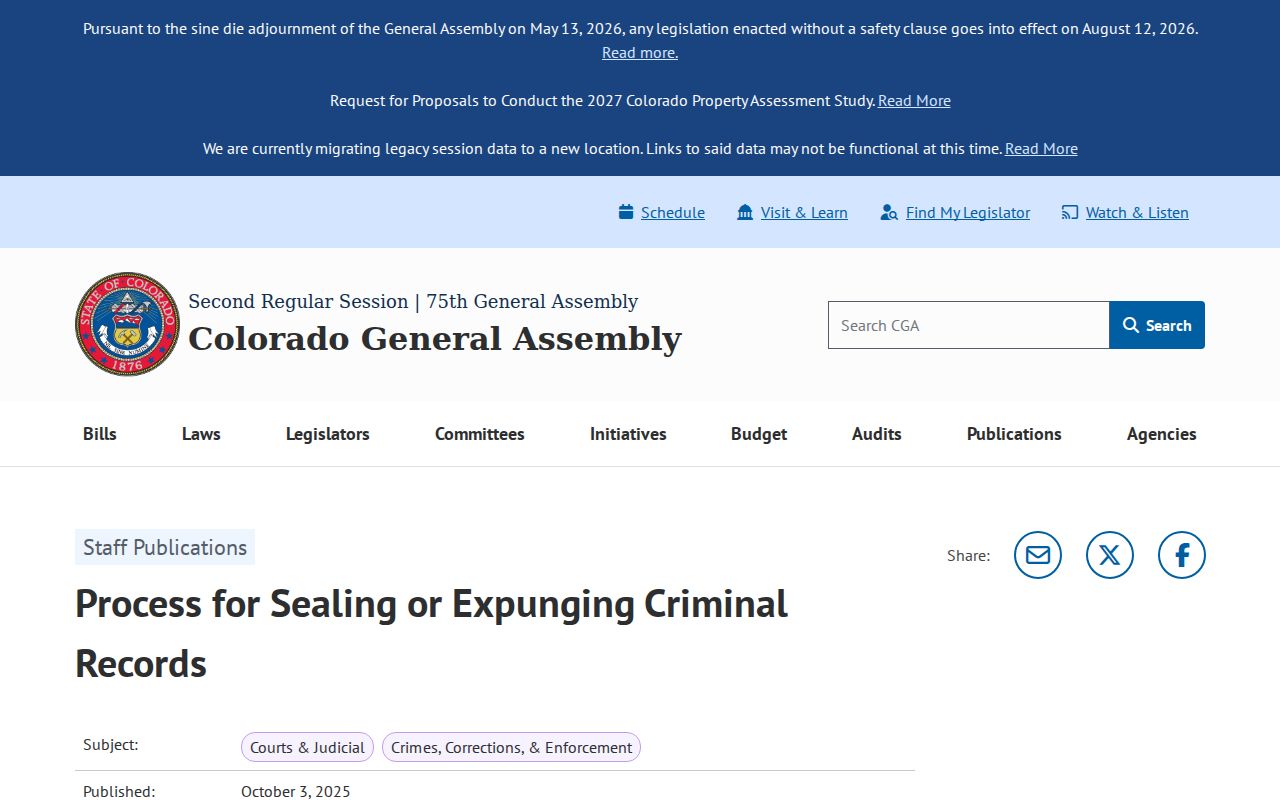
The state material makes one point plain. Check any docket search omission against current access rules before treating it as a case outcome.
Key rules: CJD 05-01 controls court-record access. C.R.S. sections 24-72-701 through 710 govern sealing processes. Eligibility depends on the case, offense, disposition, and timing.
Hinsdale Criminal Docket Access Changes
Colorado passed HB24-1133, with provisions effective in 2025. The law covered mistaken-identity expungement, access by an attorney with the subject's permission for legal advice or representation, deferred-judgment treatment, remote sealing hearings, and work on older non-conviction records. Those changes matter. Old assumptions can clash with what a current docket display shows. The official HB24-1133 legislative page carries the enacted measure and its full history.
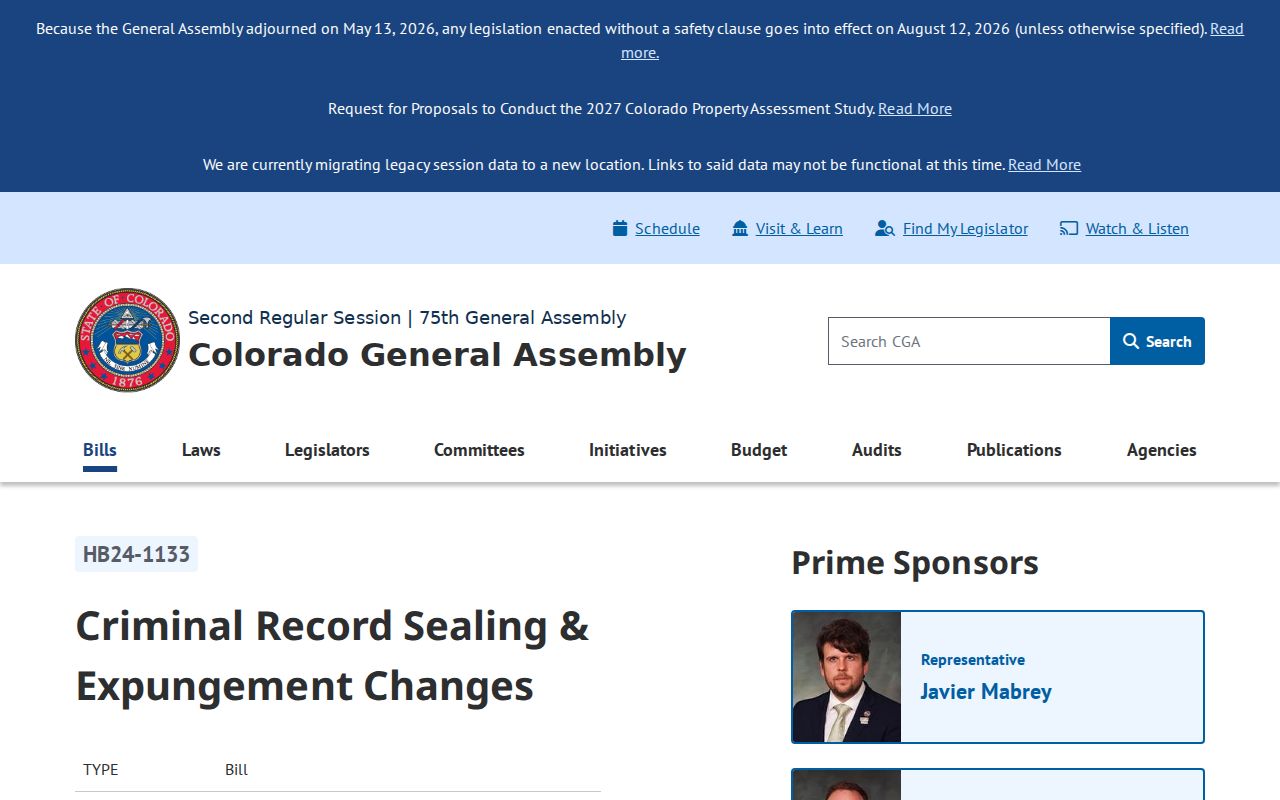
The legislation frames how access and sealing now work. Yet the clerk and the current directive remain the practical sources for any particular record. Bring specifics when you raise a correction or access question: the exact case and the source of the displayed information. Vendor data comes as is. The originating court is what counts. It holds the official ROA, the order, and any available correction procedure.